I wasn’t going to write this week.
My husband, Ken, died suddenly in a plane crash.
Even writing that sentence feels unreal.
There are the practical things that happen after someone dies. Phone calls. Lawyers. Documents. People asking questions you never imagined having to answer.
And then there is this other thing.
Someone was here.
And now they aren’t.
I keep finding that almost impossible to comprehend.
Ken and I had a long and complicated history. We were separated. There were things between us that were unresolved. There were things I was angry about. There were probably things he was angry about too.
And yet none of that seems to make grief any simpler.
Perhaps we have an idea that grief belongs to uncomplicated love.
That if a relationship was difficult, or had changed, or had hurt us, somehow the grief should be different too.
I’m discovering that isn’t how it works.
You can be angry with someone and miss them.
You can know a relationship could no longer be what it once was and still grieve what it was.
You can remember the difficult years and, almost in the same moment, remember a completely ordinary afternoon from decades ago.
All of it can be true at once.
This is perhaps the part that has struck me most.
I have spent much of my professional life talking about health.
How we eat. How we sleep. How we age. How we manage stress. How we understand our bodies and make choices that might allow us to live healthier, longer lives.
The wellness world goes even further.
We talk about longevity.
Optimization.
Biological age.
How to add years to our lives and life to our years.
I believe much of that work matters. I wouldn’t have spent my life doing it if I didn’t.
But death has a rather brutal way of reminding us of something wellness doesn’t particularly like to talk about.
We don’t control how long we get.
We can influence our health.
We can take care of ourselves.
We can make sensible choices.
But none of us has been promised another twenty years.
Or another year.
Or, for that matter, another Tuesday.
That doesn’t make taking care of ourselves pointless.
I’m beginning to think it makes it more important — but perhaps for a different reason.
We can become so preoccupied with living longer that we forget to ask whether we are actually living.
We postpone things.
I’ll make that trip when work settles down.
I’ll call her tomorrow.
I’ll forgive him eventually.
I’ll start painting again when I have more time.
I’ll sit on the beach when I’ve finished everything on my list.
Except the list never ends. And neither, apparently, does our belief that there will be another opportunity.
Until there isn’t.
I’m not suggesting we abandon responsibility and spend our retirement accounts in Paris.
Although Paris does sound rather good at the moment.
I’m wondering whether health itself has become another thing we are trying to perfect before we allow ourselves to live. Perhaps the purpose of taking care of our bodies isn’t to guarantee ourselves some particular number of years.
Perhaps it is to be present for the years we actually have.
That feels important to say.
I’m a teacher. A practitioner. I am accustomed to taking complicated things and trying to make some sense of them.
I can’t make sense of this yet.
I’m not ready to tell you what death has taught me.
I’m not going to give you five Ayurvedic ways to navigate grief.
I’m certainly not going to wrap this up with a beautiful quotation about everything happening for a reason.
Sometimes something terrible happens.
And it hurts.
Perhaps there will be wisdom in it eventually.
Right now there is mostly the strange experience of realizing that someone who occupied an enormous part of my life is no longer somewhere in the world.
And that has made me look at my own life differently.
At the people I love.
At the conversations I keep meaning to have.
At the places I keep meaning to go.
At the amount of time I spend worrying about things that, from where I’m standing today, suddenly look very small.
Not because I know the answer.
Because this is the question I am asking myself.
If you stopped assuming you had plenty of time, what would you do differently?
Who would you call?
What would you stop worrying about?
Where would you go?
What would you finally say?
What would you allow yourself to enjoy now instead of someday?
I don’t think contemplating death has to make life frightening. Perhaps acknowledging that it ends is one of the things that makes being here so extraordinary.
I have spent years talking about living a healthier life. Right now, I’m much more interested in something simpler.
Are we actually living the life we have?
I don’t know where this experience will take me yet.
For once, I’m not trying to know.

The Holistic HIghway integrates traditional Western medical practices with Ayurveda medicine, creating a focus on prevention through nutrition, diet, and exercise; use of the latest genetic testing and other diagnostic techniques; and prescribed combinations of botanical medicines, supplements, therapeutic diets, detoxification programs, or stress-management techniques.
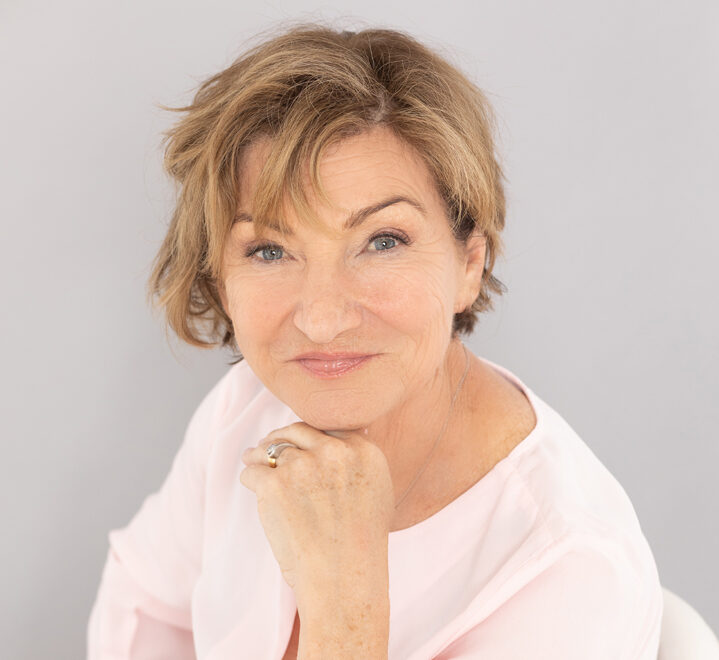
Integrative Health Expert | Ayurveda Practitioner | Author | Speaker
Kerry is a globally recognized leader in integrative medicine and the science of health known as Ayurveda. She is passionate about raising awareness of the need for a change in contemporary medicine that focuses on patient empowerment and a health-based (rather than disease-based) medical system.
Kerry is connected with The University of Pittsburgh Center for Integrative Medicine and remains a pioneer in the field of integrative medicine where she has developed a personalized system to manage chronic disorders by incorporating fundamental changes in diet, behavior, and stress while focusing on genetics.
This individualized program is so successful that many of her clients have achieved maximum healing and vitality after years of chronic problems!
More to Explore